

TL;DR:
- Portable power sources are essential for modern road trips, providing reliable, silent electricity for devices and appliances. Choosing the right capacity, battery chemistry, and charging methods ensures a safe and seamless travel experience, especially in remote areas. Proper planning and equipment selection prevent power failures and improve safety, comfort, and connectivity on the road.
Portable power refers to compact, rechargeable electricity sources that let travelers run devices and appliances on the road, completely independent of the power grid. For road trip enthusiasts, this technology has shifted from a nice-to-have camping extra to a genuine daily infrastructure necessity as phones, GPS units, laptops, and even small fridges now define the modern travel experience. Portable power stations and power banks, built on technologies like LiFePO4 battery chemistry, give you reliable, on-demand electricity wherever the road takes you. Understanding why portable power is essential for road trips means understanding how much your trip depends on electricity you cannot always plug into a wall.
Why is portable power crucial for modern road trips?
Portable power stations are the backbone of a connected, comfortable road trip. Your phone handles navigation, payments, and communication simultaneously, and that combined load drains batteries far faster than a single use case. A dead phone in an unfamiliar area is not just inconvenient. It is a genuine safety risk.

The comparison with traditional gas generators makes the case clearly. Portable power stations operate silently and produce zero emissions, which means you can run them inside a tent, an RV, or a parked vehicle without any carbon monoxide risk. Gas generators require ventilation, produce noise, and need fuel resupply. For road travelers, that difference matters every single night.
Here is what a quality portable power station supports on a typical trip:
- Navigation and communication: Phones, tablets, and GPS devices stay charged throughout long driving days.
- Photography and content creation: Cameras, DJI drones, and laptop editing setups run without hunting for outlets.
- Comfort appliances: Mini fridges, cooling fans, and CPAP machines operate at campsites or rest stops.
- Emergency preparedness: Jump starters, emergency lighting, and medical devices stay ready when you need them most.
- Remote work: Laptops, monitors, and mobile hotspots keep you productive on the road.
“Portable power has become the connective tissue of the modern road trip. Without it, the entire digital layer of travel collapses.”
The safety dimension alone justifies carrying a portable power station. A reliable unit can power emergency lighting during a breakdown, keep a medical device running overnight, or provide the charge needed to call for help in a dead zone.
How to choose the right portable power for your trip
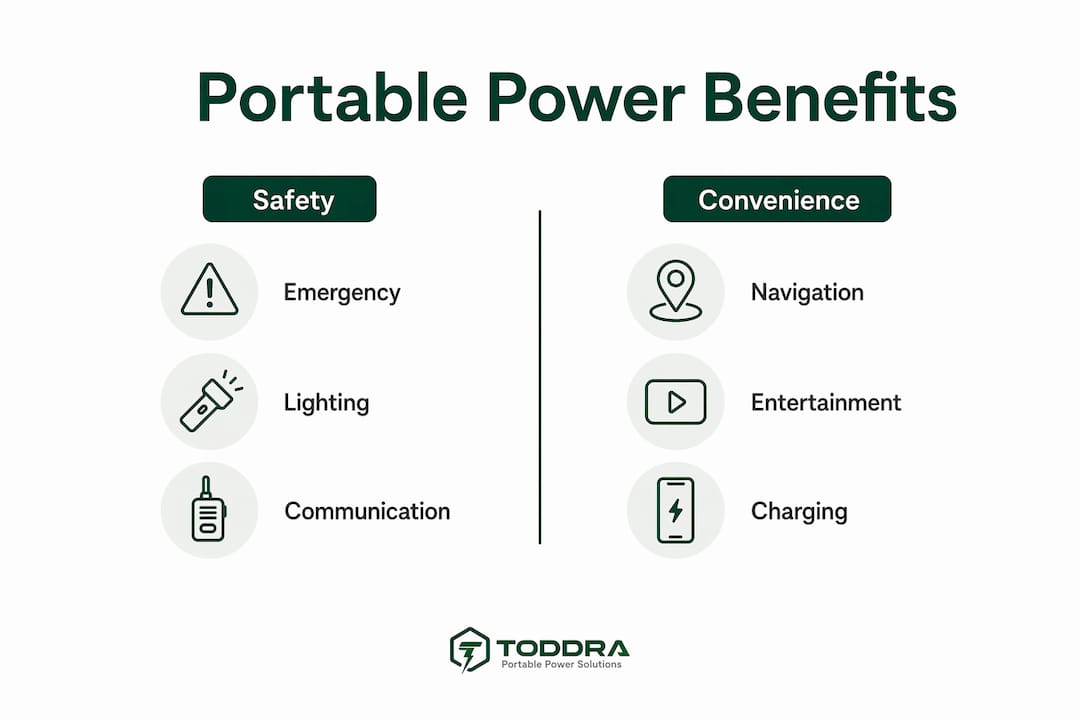
Choosing the right portable power solution starts with understanding two numbers: watt-hours (Wh) and watts (W). Wh measures total energy capacity, like the size of a fuel tank. Watts measures how fast that energy can be delivered, like the engine size. You need both numbers to match your actual trip demands.
10,000mAh power banks work well for light GPS and smartphone use on short city trips. For long-haul travel with multiple devices, a 20,000mAh unit is the practical minimum. Full portable power stations, measured in Wh rather than mAh, handle heavier loads like fridges and laptops.
LiFePO4 vs. traditional lithium-ion
Battery chemistry matters more than most travelers realize. LiFePO4 (LFP) batteries deliver safer thermal profiles and over 3,000 charge cycles, compared to the shorter lifespan of traditional lithium-ion cells. That cycle count translates directly to years of reliable use across hundreds of road trips. LFP batteries also handle heat better, which matters when a unit sits in a sun-exposed vehicle.
| Feature | LiFePO4 (LFP) | Traditional Lithium-Ion |
|---|---|---|
| Cycle life | 3,000+ cycles | 500–1,000 cycles |
| Thermal safety | High | Moderate |
| Weight | Slightly heavier | Lighter |
| Best for | Long-term road use | Short trips, light loads |
| Cost | Higher upfront | Lower upfront |
One critical mistake travelers make: evaluating only device voltage instead of total energy load. Combined startup wattage from a mini fridge and a laptop running simultaneously can trip an inverter even when each device looks safe on paper. Always check the surge wattage rating of your power station, not just the continuous output.
For air travel, FAA and TSA rules cap carry-on lithium batteries at 100Wh without airline permission. Batteries above that threshold require advance approval and cannot be checked. Verify your unit’s Wh rating before booking any flight legs on a road trip itinerary.
Pro Tip: Match your power station’s capacity to your longest off-grid stretch, not your average night. One unexpected detour or campsite without hookups will test your real-world limits.
Charging methods and tips for staying powered on the road
Keeping your portable power station charged requires a clear plan, not just a cable. Three main charging sources exist: AC wall outlets, solar panels, and vehicle 12V sockets. Each has a different speed and practical role.
- AC wall outlets deliver the fastest recharge and work best at hotels, campgrounds with hookups, or rest stops with public charging stations.
- Solar panels provide the most independence on extended trips. A compatible solar panel array can recharge a station at a campsite without any grid access, making them ideal for boondocking.
- Vehicle 12V sockets are the most convenient but the least powerful. Vehicle cigarette sockets are typically limited to 100–150W and may not deliver full power unless the engine is running. Relying on them as a primary charging source on a long trip leads to frustration.
The practical strategy for most road trips is to combine methods. Charge via AC whenever you stop at a hotel or campground with power. Use solar during daylight hours at off-grid sites. Reserve the vehicle socket for top-off charging during long driving days.
Battery maintenance is easy to overlook but genuinely extends the life of your unit. Cycling your battery every three months during storage prevents accelerated degradation. A unit stored at full charge for months without use loses capacity faster than one that is regularly cycled. Before any major trip, run the unit through a full charge and discharge cycle to confirm it is performing at rated capacity.
Pro Tip: Avoid storing your power station at 0% or 100% charge for extended periods. A 40–80% charge range during storage preserves cell health and extends total lifespan.
Real-world scenarios where portable power changes everything
The practical benefits of portable chargers become clearest when you look at specific travel scenarios. Portable power stations support mini fridges, cooling fans, and simultaneous device charging, turning a basic campsite into a genuinely comfortable base camp.
Consider these real-world use cases:
- Outdoor photography trips: Charging DJI drone batteries, camera bodies, and a laptop for editing requires consistent power across a full day. A 1,000Wh+ station handles this load comfortably.
- Remote work on the road: A laptop, mobile hotspot, and monitor can run simultaneously from a mid-range power station, making a national park or mountain campsite a functional office.
- Family road trips: Keeping tablets, phones, and portable gaming devices charged for multiple passengers eliminates the constant competition for car charger ports.
- Emergency preparedness: A power station with a jump-start function or a separate jump starter keeps you moving after a dead battery in a remote location.
- Medical device support: CPAP machines, insulin coolers, and other medical devices require reliable overnight power that a campground hookup cannot always guarantee.
| Scenario | Recommended capacity | Key devices powered |
|---|---|---|
| Weekend camping | 500–700Wh | Phones, camera, small fan |
| Extended road trip | 1,000–1,500Wh | Laptop, fridge, drone, phones |
| Remote work setup | 1,500–2,000Wh | Laptop, monitor, hotspot, lights |
| Off-grid boondocking | 2,000Wh+ | Full appliance suite, solar input |
The importance of portable power grows with trip length and remoteness. A weekend trip to a state park with hookups needs far less capacity than a two-week off-grid drive through the Southwest. Sizing your station correctly by matching capacity to your actual device load prevents the most common road trip power failure.
Key Takeaways
Portable power is essential for road trips because it provides reliable, silent, and emission-free electricity for safety, connectivity, and comfort across every type of travel scenario.
| Point | Details |
|---|---|
| LiFePO4 chemistry leads | LFP batteries offer 3,000+ cycles and better thermal safety than traditional lithium-ion cells. |
| Match capacity to real load | Choose Wh capacity based on your longest off-grid stretch and total device energy draw. |
| Check surge wattage | Combined startup loads from fridges and laptops can trip inverters despite safe individual ratings. |
| Prioritize solar and AC charging | Vehicle 12V sockets top out at 100–150W and are too slow for primary recharging on long trips. |
| Cycle batteries regularly | Running a full charge/discharge cycle every three months prevents storage degradation. |
What years of road trips taught me about portable power
I used to treat a power bank as backup gear, something to toss in the bag just in case. That thinking cost me on a five-day trip through Utah when my phone died mid-navigation in a canyon with no cell signal. A proper portable power station would have made that a non-event. Instead, it became a two-hour detour.
The biggest misconception I see among road trip enthusiasts is treating capacity as the only metric. Travelers buy a unit with impressive Wh numbers and then discover their mini fridge trips the inverter on startup because nobody checked the surge wattage. That is a fixable mistake, but it requires reading the spec sheet before you leave the driveway.
The other shift I have noticed is how portable power has changed the psychology of a trip. Knowing your devices are covered removes a low-level anxiety that most travelers do not even realize they are carrying. You stop rationing phone use. You stop skipping the scenic detour because you are worried about battery life. The trip gets better in ways that are hard to quantify but immediately felt.
The technology is only getting more capable. LiFePO4 stations are lighter and more affordable than they were three years ago, and solar compatibility has improved enough that a two-panel setup can meaningfully recharge a mid-size station in a full day of sun. For anyone planning a serious road trip in 2026, a quality portable power station is not optional gear. It is the foundation everything else depends on.
— Jackson
Reliable portable power options for your next road trip
Toddra carries a carefully selected range of portable power stations and solar generators built for exactly the kind of travel this article describes.
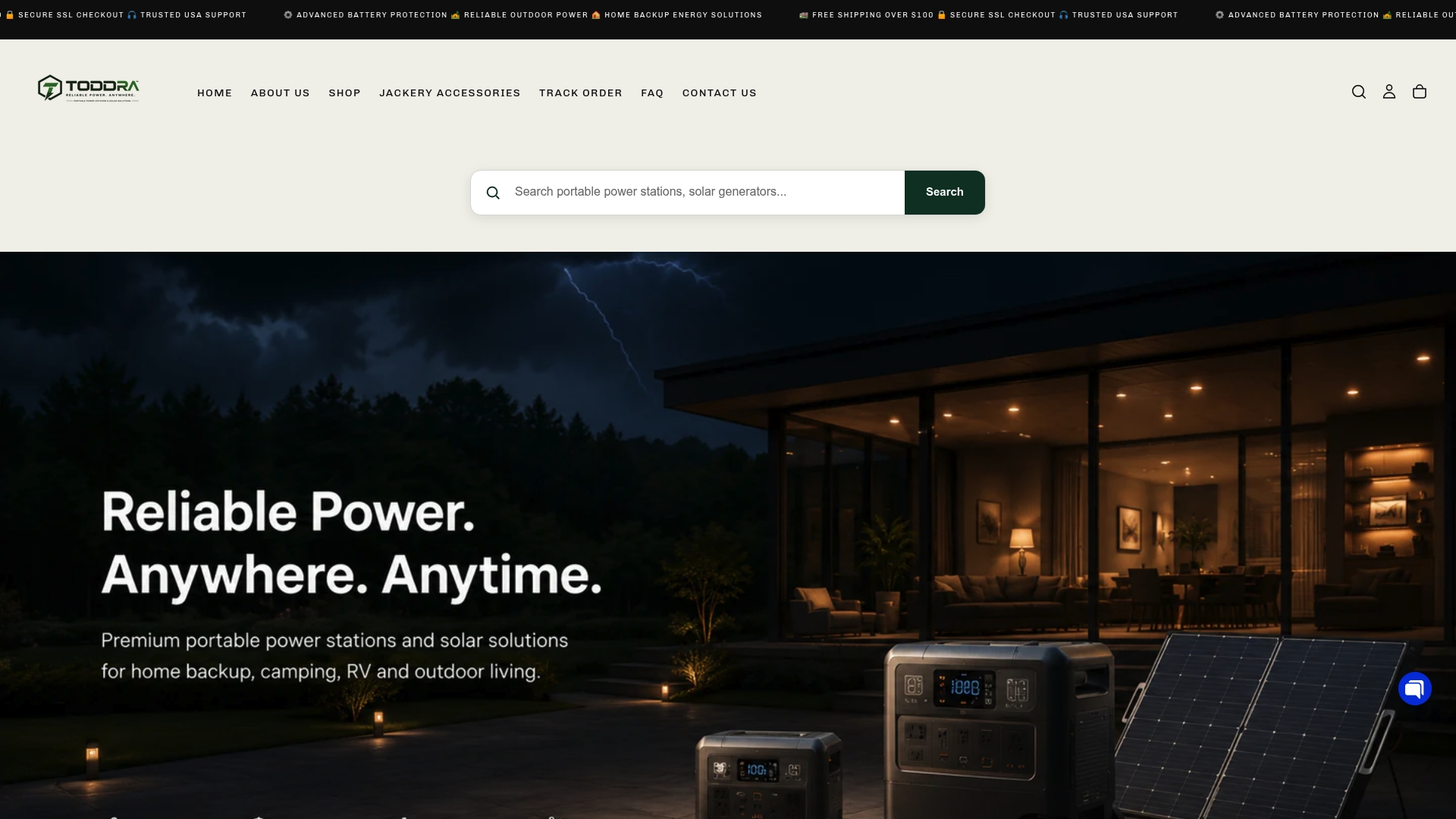
The Jackery Solar Generator 2000 Plus offers 2,042Wh of capacity and 3,000W of output using LiFePO4 chemistry, making it a strong match for extended road trips, remote work setups, and off-grid camping. For travelers who need even more capacity, Toddra also carries expansion battery packs that scale up your system without replacing your existing unit. Every product ships with US-based customer support and secure checkout, so you can buy with confidence and hit the road ready.
FAQ
What is a portable power station?
A portable power station is a rechargeable battery unit with built-in AC outlets, USB ports, and DC outputs that powers devices and small appliances without a grid connection. They differ from standard power banks in capacity and output, typically measured in watt-hours rather than milliamp-hours.
How much capacity do I need for a road trip?
A 10,000mAh power bank covers light smartphone and GPS use on short trips, while a 20,000mAh unit handles multiple devices on longer drives. For running appliances like mini fridges or laptops, a portable power station of 1,000Wh or more is the practical choice.
Are portable power stations safe to use inside a vehicle or tent?
Yes. Portable power stations produce zero emissions and operate silently, making them safe for use inside tents, RVs, and vehicles. Gas generators, by contrast, produce carbon monoxide and require outdoor ventilation.
Can I bring a portable power station on a plane?
FAA and TSA rules allow lithium batteries up to 100Wh in carry-on luggage without special permission. Units above 100Wh require airline approval and cannot be placed in checked baggage.
How do I keep my portable power station charged during a long road trip?
The most effective approach combines AC charging at hotels or campgrounds, solar panel charging at off-grid sites, and vehicle socket top-offs during driving. Solar and AC charging are significantly faster and more reliable than vehicle 12V sockets, which are typically limited to 100–150W.