

Portable solar panels are photovoltaic modules designed to generate electricity from sunlight without any connection to the power grid, making them the most practical renewable energy tool for travelers. The benefits of portable solar panels for travel go well beyond simple convenience. They give you true energy independence, cut ongoing fuel costs, and let you stay off-grid for days without resupply. Brands like Jackery and EcoFlow have made this technology accessible and genuinely travel-ready, with panels that charge devices anywhere sunlight is available.
1. what are the top benefits portable solar panels offer travelers?
Portable solar energy benefits start with one core fact: sunlight is free and available almost everywhere you travel. That means no fuel runs, no generator noise, and no hunting for a campground with electrical hookups. The advantages of portable solar panels compound quickly once you understand how they work together.
- Energy independence. You stop relying on grid power or propane generators entirely. A 100W panel paired with a Jackery power station keeps phones, laptops, and portable fridges running through multi-day trips.
- Cost savings over time. The upfront investment replaces recurring fuel and battery purchases. On a two-week road trip, that difference is measurable.
- Sustainability. Solar panels produce zero emissions during operation. That directly reduces your carbon footprint compared to gas-powered generators or single-use battery packs.
- Device versatility. Modern panels support everything from USB-C phones to 12V coolers, making them useful across camping, van life, and backcountry hiking.
- Continuous renewable supply. Unlike standard batteries that deplete and stay depleted, solar panels renew energy continuously as long as the sun is out. That distinction matters most on trips longer than two days.
Pro Tip: Pair a 100W foldable panel with a 500Wh power station for a 2–3 day trip in sunny conditions. Scale up the panel wattage for longer trips or cloudy destinations.
2. how real-world performance shapes the actual benefits
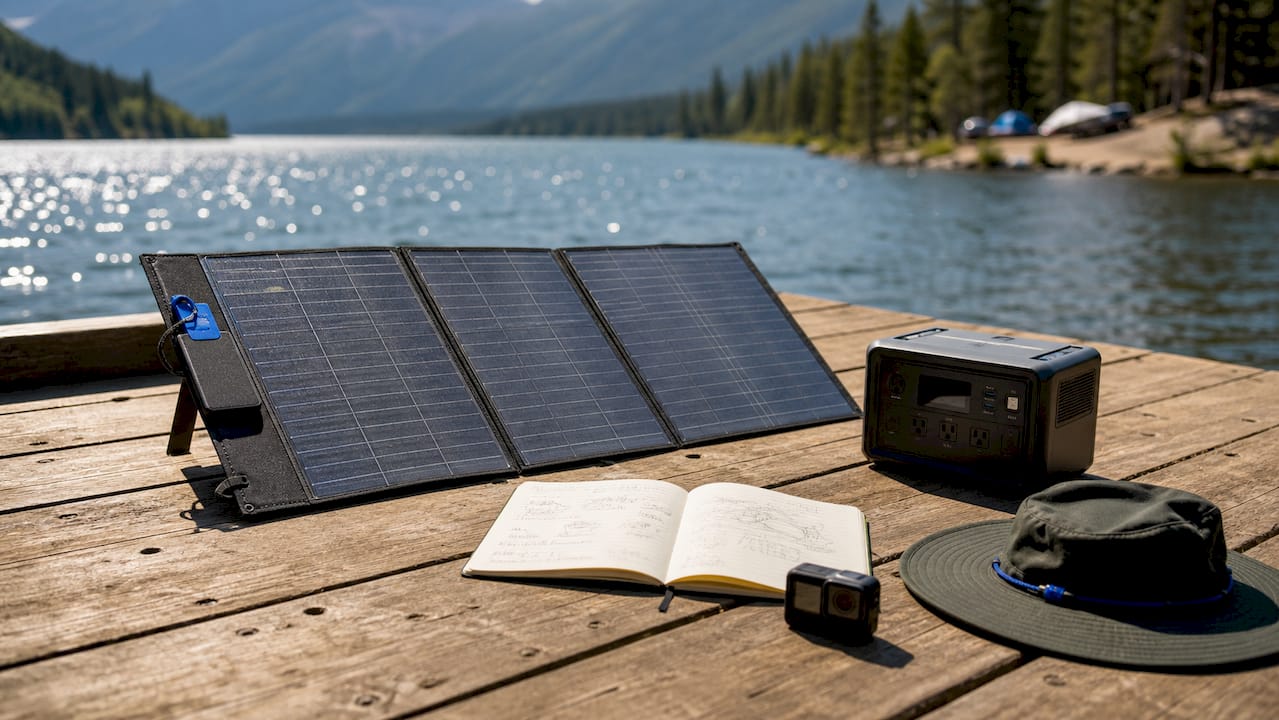
Rated wattage and real-world output are not the same number. Real panel output runs 75–80% of the rated wattage under typical field conditions. That means a 100W panel reliably delivers around 75–80W, which directly affects how long your power station takes to recharge.
Use an 85% efficiency rule when planning your energy budget. That single habit prevents the frustrating surprise of a half-charged battery at sunset.
Shading losses are larger than you expect
Partial shading is the most underestimated performance killer in travel setups. As little as 2% shading can reduce panel output by 20–50%. The loss is nonlinear, meaning a small shadow from a tent pole or backpack strap causes a disproportionately large power drop. Careful placement away from any overhead obstruction is not optional. It is the single most impactful thing you can do to protect your energy harvest.
Heat reduces output on sunny days
High temperatures hurt solar output in a way most travelers do not anticipate. Panel output drops 0.3%–0.5% per degree Celsius above 25°C. At a panel surface temperature of 65°C, which is common on a hot summer day, you can lose up to 20% of rated output. Elevating the panel slightly off the ground and allowing airflow underneath keeps surface temperatures lower and output higher.
Voltage matching matters
Not all 100W panels deliver equal usable power to your power station. Matching panel voltage and current to your power station’s input specifications is the difference between efficient charging and wasted capacity. Always verify compatibility before you buy.
| Factor | Typical Impact | Mitigation |
|---|---|---|
| Rated vs. real output | 75–80% of rated wattage | Use 85% rule for planning |
| 2% partial shading | 20–50% output loss | Place panels in full, open sun |
| Heat above 25°C | Up to 20% output loss at 65°C | Elevate panel for airflow |
| Voltage mismatch | Underutilized wattage | Verify input specs before purchase |
3. foldable, rigid, or flexible: which panel type fits your trip?
The best solar panels for travel depend on how you travel, not just how much power you need. Each panel type makes a different trade-off between portability, durability, and output.
Foldable panels are the top choice for most travelers. They deploy in under 60 seconds without tools and fold down to a size comparable to a laptop bag. Jackery’s foldable panels are a strong example of this category done well. The quick setup also makes repositioning throughout the day practical, which matters more than most people realize.
Rigid panels offer the best durability and the highest output per dollar. They work well for base camps or vehicle-mounted setups where you are not moving the panel frequently. Their weight and size make them impractical for backpacking or airline travel.
Flexible panels mount on curved surfaces like van roofs, kayaks, or backpacks. They are lighter than rigid panels but typically less efficient and more prone to damage over time. They suit travelers who need a semi-permanent, low-profile installation.
| Panel Type | Weight | Setup Time | Best Use Case |
|---|---|---|---|
| Foldable | Light (2–5 lbs) | Under 60 seconds | Camping, road trips, backpacking |
| Rigid | Heavy (10–20 lbs) | 5–15 minutes | Base camps, vehicle mounts |
| Flexible | Very light (1–3 lbs) | Permanent mount | Van roofs, kayaks, backpacks |
For most travelers, foldable panels paired with Jackery solar accessories hit the best balance of portability, output, and ease of use.
4. how to use solar panels on trips to maximize energy
Knowing how to use solar panels on trips effectively separates travelers who get full value from those who end up with a half-charged station at dusk. Placement and planning are the two levers that matter most.
- Avoid all shade sources. Trees, tent fabric, vehicle overhangs, and even your own cables cast shadows that cause outsized power losses. Set up panels in a fully open area.
- Reposition panels every 2–3 hours. Tracking the sun throughout the day significantly increases total energy capture compared to leaving a panel in one fixed position. Foldable panels make this easy.
- Tilt toward the sun. Angle the panel face directly at the sun, not just flat on the ground. A 15–30 degree tilt toward the sun’s position adds meaningful output.
- Use extension cables for flexibility. A DC extension cable lets you place the panel in the best sun position while keeping your power station in the shade or inside your tent.
- Plan your recharge window. Peak solar hours run roughly 10 a.m. to 3 p.m. in most locations. Schedule your heaviest device charging during that window and let the power station carry the load overnight.
- Match your system capacity to your trip. A 500Wh system with a 100W panel supports a 2–3 day trip in good sun. Add panel wattage or battery capacity for longer trips or cloudier climates.
Pro Tip: Use a solar panel connector kit to daisy-chain multiple panels when you need faster recharge times on longer trips.
5. environmental and lifestyle advantages beyond the numbers
The eco-friendly travel solutions argument for portable solar panels is straightforward: zero emissions, zero fuel, and zero noise. No combustion generator produces those three outcomes simultaneously. That combination also creates practical advantages that go beyond environmental values.
“Going solar on the road is not just a green choice. It is a freedom choice. You stop planning your trip around fuel stops and power hookups and start planning it around where you actually want to go.”
Legal and access advantages are real and often overlooked. Many national forests, wilderness areas, and fire-restricted zones prohibit combustion engines during high-risk seasons. Solar panels have no such restrictions. They give you access to locations where generators are banned outright.
Extended off-grid capability is the lifestyle benefit that matters most to serious travelers. A solar-charged system lets you generate clean electricity continuously without resupply, extending your stay in remote locations from days to weeks. That kind of freedom changes how you plan and experience a trip.
Reduced power anxiety is a quieter benefit, but a real one. Knowing your system recharges every day removes the mental load of rationing battery life. You check the weather, not the battery percentage, when deciding how long to stay.
Key takeaways
Portable solar panels deliver the most value when travelers combine the right panel type with smart placement, proper system sizing, and compatible accessories.
| Point | Details |
|---|---|
| Real output is 75–80% of rated | Plan your energy budget using the 85% efficiency rule to avoid shortfalls. |
| Shade causes outsized losses | Even 2% shading can cut output by up to 50%; always place panels in full sun. |
| Foldable panels suit most travelers | They deploy in under 60 seconds and reposition easily for maximum sun tracking. |
| System sizing determines trip length | A 500Wh battery with a 100W panel reliably supports a 2–3 day trip in good sun. |
| Solar enables access and freedom | Zero emissions and no noise rules mean solar works in fire-restricted zones where generators are banned. |
Why i think most travelers underestimate solar panels
I have spent time with portable solar setups across desert camping trips, mountain basecamp stays, and extended van travel. The honest observation is this: most travelers buy the right panel and then use it wrong. They set it flat on the ground at 8 a.m., walk away, and wonder why the power station is only 60% charged by evening.
The biggest shift in my own practice came from treating panel repositioning as a non-negotiable habit, not an optional extra. Moving a foldable panel three times a day to track the sun is a five-minute task that can add 20–30% more energy to your daily harvest. That is the difference between a full charge and a partial one.
I also think the pairing decision matters more than the panel itself. A quality panel connected to a mismatched or underpowered station wastes money and creates frustration. Jackery’s ecosystem, available through Toddra’s power station range, is one of the most reliable combinations I have seen for travelers because the voltage and current specs are designed to work together from the start.
The environmental case is real, but for most travelers, the practical case closes the deal. No noise. No fuel. No restrictions. Those three things change where you can go and how long you can stay.
— Jackson
Power your next adventure with Toddra
Toddra carries a carefully selected range of portable power stations and solar generators built specifically for travelers who want reliable, renewable energy on every trip. Whether you are planning a weekend camping trip or a month-long road adventure, Toddra’s lineup includes Jackery power stations sized for every energy need, along with the accessories that make solar setups work at their best. From connector cables for the Explorer series to DC extension cables and carrying cases, every product is chosen for quality and real-world usability. Toddra offers US-based customer support and secure checkout, so you can shop with confidence and hit the road ready.
FAQ
What are the main benefits of portable solar panels for travel?
Portable solar panels provide energy independence, zero emissions, and continuous renewable power without fuel or grid access. They support devices from phones to portable fridges and work in locations where generators are prohibited.
How much power does a portable solar panel actually deliver?
Real-world output runs 75–80% of the rated wattage under typical field conditions. Use an 85% efficiency rule when estimating recharge times and planning your energy needs for a trip.
What is the best solar panel type for camping and road trips?
Foldable solar panels are the best option for most travelers. They deploy in under 60 seconds, weigh 2–5 pounds, and reposition easily throughout the day to track the sun and maximize energy capture.
How do i avoid losing power from shading?
Place your panel in a fully open area away from trees, tent fabric, cables, and vehicle overhangs. Even 2% shading can reduce output by 20–50% due to the nonlinear nature of electrical losses in solar cells.
Can i use portable solar panels in fire-restricted areas?
Yes. Portable solar panels produce no combustion, no emissions, and no noise, so they are permitted in fire-restricted zones and wilderness areas where gas-powered generators are banned.